Jumat, 01 Juli 2016

Ebook Download A Journey to Softness: In Search of Feel and Connection with the Horse

Ebook Download A Journey to Softness: In Search of Feel and Connection with the Horse

Currently, this trouble is so easy to fix. When you could attach to the net, you could locate and get the book quickly. When you really require the A Journey To Softness: In Search Of Feel And Connection With The Horse to be your reading product sooner, you can visit this page and also click the link that we have already given. Guide prepares to order. When in various other time you will need much more days to obtain guide, in this article the soft documents that we will offer will be directly done.
A Journey to Softness: In Search of Feel and Connection with the Horse

A Journey to Softness: In Search of Feel and Connection with the Horse


A Journey to Softness: In Search of Feel and Connection with the Horse


Ebook Download A Journey to Softness: In Search of Feel and Connection with the Horse

Spend your time even for only few minutes to review a publication A Journey To Softness: In Search Of Feel And Connection With The Horse Reading a publication will never lower as well as waste your time to be ineffective. Checking out, for some folks end up being a requirement that is to do on a daily basis such as spending quality time for eating. Now, what concerning you? Do you want to check out a publication? Now, we will show you a brand-new publication entitled A Journey To Softness: In Search Of Feel And Connection With The Horse that could be a brand-new means to explore the understanding. When reading this e-book, you can get something to consistently bear in mind in every reading time, also tip by action.

Visiting an internet site that is very finished as in this location is unusual. So, it's your good luck to discover us. As well as pertaining to the A Journey To Softness: In Search Of Feel And Connection With The Horse, we provide you this publication in soft file. So, you will not have to really feel difficult to bring the printed publication when planning to read it every single time. If you feel bemused concerning how you can get it, you could conserve the documents in your device and also other tool. So, when you open the gadget, you can be reminded about guide inside.

Own this book asap after completing read this site page. By possessing this book, you could have time to spare to read it obviously. Also you will not have the ability to finish it in short time, this is your possibility to change your life to be much better. So, why don't you save your time also juts few in a day? You can read it when you have spare time in your workplace, when remaining in a bus, when going to home prior to sleeping, and also much more others.

Merely link your tool computer system or device to the net connecting. Obtain the modern-day innovation to make your downloading A Journey To Softness: In Search Of Feel And Connection With The Horse finished. Also you don't wish to read, you could straight shut the book soft file as well as open A Journey To Softness: In Search Of Feel And Connection With The Horse it later. You could also easily obtain guide almost everywhere, considering that A Journey To Softness: In Search Of Feel And Connection With The Horse it is in your gizmo. Or when being in the workplace, this A Journey To Softness: In Search Of Feel And Connection With The Horse is likewise recommended to review in your computer gadget.

A Journey to Softness: In Search of Feel and Connection with the Horse

Review

“In these forthright stories, you’ll get a glimpse of a life that has produced a man known for his ability to solve difficult problems with communication rather than force.” Trail Rider Magazine

Read more

About the Author

Mark Rashid (pronounced RASH-id) is an internationally acclaimed horse trainer known for his ability to understand the horse’s point of view and solve difficult problems with communication rather than force. He began working with horses at age ten, when he met the “old man,” who taught him to work with horses, not against them, and to listen to what the horse is trying to say. Mark’s clinics center on one-on-one work with horse and rider and are immensely popular with people around the world.When Mark decided to study the martial art of aikido as a way to improve his horsemanship, he brought the same quiet determination to it that he exhibits in his work with horses. After years of practice, he has earned a second degree black belt in Yoshinkan aikido and now teaches the “way of harmony” in the local dojo.Mark worked full time on ranches for many years gathering herds, managing stock, and training horses. When time permits, he still enjoys working on ranches near his home in Estes Park, Colorado.Mark has been a guest on NPR’s The Horse Show and was featured on the Nature series on PBS. He is the author of nine books - Considering the Horse, A Good Horse is Never a Bad Color; Horses Never Lie; Life Lessons from a Ranch Horse; Horsemanship Through Life; Big Horses, Good Dogs, & Straight Fences; A Life With Horses; Whole Heart, Whole Horse; and his latest, a novel, Out of the Wild. He also has a solo music CD Song of the Prairie and enjoys singing and playing guitar with a local band The Elktones.Skip Ewing lives in Nashville, TN.

Read more

Product details

Paperback: 184 pages

Publisher: Trafalgar Square Books (February 2, 2016)

Language: English

ISBN-10: 1570767580

ISBN-13: 978-1570767586

Product Dimensions:

6.8 x 0.5 x 7.5 inches

Shipping Weight: 12 ounces (View shipping rates and policies)

Average Customer Review:

4.7 out of 5 stars

93 customer reviews

Amazon Best Sellers Rank:

#107,888 in Books (See Top 100 in Books)

I am such a fan of Mark Rashid and his approach to working with horses! LOVE his books; they are what started me on a path to a kinder, softer way with horses. I had the privelege of participating in one of his clinics a few years ago, as well. This book was an excellent read, and put many things into perspective for me. I "discovered" it at just the right time, too, when I was struggling with many of the concepts he discusses. If you are serious about finding a better way to "be" with horses, both on the ground and in the saddle, then you will definitely enjoy and benefit from this book. Highly recommend all of his other books, as well!

I usually love Mark Rashid books but not this one. SO much of this book is filled with martial arts stories and contributions by his clinic participants that I became bored and impatient to get through it. After skipping past the above referenced annoyances, there wasn't much left to read about a feel and connection to horses. I wrongly assumed the book would be about Rashid and his journey to softness, told through personal accounts with horses. What it turned out to be mostly about is other people's journeys and his accounts of softening through martial arts. Some of theses accounts, overbearing long.

This is a GREAT book! Softness with your training comes first from the inside of the rider. Easy to say, hard to do.... He address how our unresolved tensions in our daily lives and bodies is directly transmitted to our horses in training them. If you are wound up - get it under control or stay away from training. Oh, how I hang my head in shame for my past transgressions of dumping my lifes' B.S. into my horses and not understanding that their problems were the result of my issues. Over time I have learned to calm and re-gather with a peppermint, slowly sucked, while sitting quietly on my poor victim in training. Thank you, Bobby Avella. (Sp.?) A comment he made at one of his clinics years ago. Have gone through bags of mints over the years. This is not quite what Mark is saying, but a start. He talks of softness in your whole day to day life, being present with true internal calm. Horses do know the difference and react accordingly. Building trust while your mind and body are in a grind just won't happen. This is well written, easy to read and more than worth reading from continually with the hopes that you will GET IT and, eventually, you will communicate more softly with life and your horses. Keep it close...it is a life lesson.

I love the idea of "softness" as a way to relate to animals and people. The writer does an excellent job of describing what it feels like to work with a horse to achieve desired goals instead of working against the animal. The feel of "softness" communicates both ways and creates cooperation and trust.

I have been working with horses for years but felt I had missed something and was feeling uneasy about every other trainer that I have read or seen because of the GAP in methodology. This bothered me more than a little because I feel horsemanship in my bones; in my soul and I couldn’t identify the issue of what was missing.Mark Rashid has verbalized much of what I’ve been feeling. Thank you for taking the time to lay what I believe to be the cornerstone upon which all training should built.Thank you, from the horses as well.

This is a beautifully written and moving view into the world of communication. Not just for those who ride, or work with horses, but for anyone interested in how powerful and effective our thoughts and actions can be. I'm only half way through, and find that I want to savour every word and anecdote within the pages.Mark Rashid has a wonderful gift with words. I can almost hear his voice while he's recounting his experiences of life and lessons. Highly recommended!

I like this book. It really helped me to see inside myself where softness comes from. By understanding my actions and reactions to outside stimulus, I am able to now stay calm in all situations so I can be a good leader my horse needs. Between you and your horse, one of you has to be the confident leader. Who will that be in your relationship? Mark is an excellent writer too. So as well as learning a new life skill, you will also enjoy a good read!

Softness and being quiet around your horse and everywhere else in your life a goal that this book will help you understand (if you don't) and will help you achieve if you are aware. I've followed Rashid in his books and there is some interesting growth in his approach to "feel" and "softness" in this book. As always, Mark will keep you asking for more books. This might be his first book with color photos! I have another new book of Mark which continues this work on softness and great color photography: Finding the Missed Path: The Art of Restarting Horses also on Amazon

A Journey to Softness: In Search of Feel and Connection with the Horse PDF
A Journey to Softness: In Search of Feel and Connection with the Horse EPub
A Journey to Softness: In Search of Feel and Connection with the Horse Doc
A Journey to Softness: In Search of Feel and Connection with the Horse iBooks
A Journey to Softness: In Search of Feel and Connection with the Horse rtf
A Journey to Softness: In Search of Feel and Connection with the Horse Mobipocket
A Journey to Softness: In Search of Feel and Connection with the Horse Kindle

A Journey to Softness: In Search of Feel and Connection with the Horse PDF

A Journey to Softness: In Search of Feel and Connection with the Horse PDF

A Journey to Softness: In Search of Feel and Connection with the Horse PDF

Jumat, 10 Juni 2016

Free Ebook Rivers and Birds, by Merrill Gilfillan

Free Ebook Rivers and Birds, by Merrill Gilfillan

You can rapidly complete them to check out the page and then delight in obtaining guide. Having the soft documents of this book is additionally good enough. By by doing this, you may not need to bring guide anywhere. You can conserve in some suitable tools. When you have made a decision to start reviewing Rivers And Birds, By Merrill Gilfillan once more, you could start it all over as well as whenever as quickly as well done.

Rivers and Birds, by Merrill Gilfillan

Rivers and Birds, by Merrill Gilfillan


Rivers and Birds, by Merrill Gilfillan


Free Ebook Rivers and Birds, by Merrill Gilfillan

Looking forward to an improved ideas and minds are a must. It is not just done by the individuals that have huge tasks. That's also not only performed by the students or income earners in solving their responsibilities troubles. Every person has same possibility to seek and look forward for their life. Enhancing the minds and also thoughts for better way of living is a must. When you have actually decided the methods of just how you get the issues and take the solving, you need to need deep thoughts and also ideas.

When you feel hard to obtain this publication, you can take it based upon the link in this post. This is not just concerning exactly how you get guide to check out. It is about the vital point that you could gather when being in this globe. Rivers And Birds, By Merrill Gilfillan as a fashion to recognize it is not given in this website. By clicking the link, you can discover the new book to review. Yeah, this is it!

The existence of Rivers And Birds, By Merrill Gilfillan in product lists of reading can be a new manner in which supplies you the good analysis material. This source is likewise adequate to read by anyone. It will not force you ahead with something powerful or uninteresting. You can take far better lesson to be in a great way. This is not type of huge publication that includes difficult languages. This is a simple book that you could concern with. So, just how essential the book to read is.

Many individuals may have different need to read some books. For this book is likewise being that so. You may locate that your reasons are different with others. Some may read this publication for their due date obligations. Some will read it to improve the expertise. So, what sort of factor of you to read this remarkable Rivers And Birds, By Merrill Gilfillan It will certainly depend on exactly how you gaze as well as think of it. Simply get this publication now as well as be just one of the amazing readers of this book.

Rivers and Birds, by Merrill Gilfillan

Product details

Paperback: 138 pages

Publisher: 3D Press; First Edition edition (August 1, 2003)

Language: English

ISBN-10: 155566296X

ISBN-13: 978-1555662967

Product Dimensions:

5.5 x 0.2 x 7.5 inches

Shipping Weight: 6.6 ounces

Average Customer Review:

Be the first to review this item

Amazon Best Sellers Rank:

#2,403,085 in Books (See Top 100 in Books)

Rivers and Birds, by Merrill Gilfillan PDF
Rivers and Birds, by Merrill Gilfillan EPub
Rivers and Birds, by Merrill Gilfillan Doc
Rivers and Birds, by Merrill Gilfillan iBooks
Rivers and Birds, by Merrill Gilfillan rtf
Rivers and Birds, by Merrill Gilfillan Mobipocket
Rivers and Birds, by Merrill Gilfillan Kindle

Rivers and Birds, by Merrill Gilfillan PDF

Rivers and Birds, by Merrill Gilfillan PDF

Rivers and Birds, by Merrill Gilfillan PDF

Sabtu, 04 Juni 2016

Download Ebook Exploring Raspberry Pi: Interfacing to the Real World with Embedded Linux

Download Ebook Exploring Raspberry Pi: Interfacing to the Real World with Embedded Linux

Now, we have to tell you little aspect of the information related to the Exploring Raspberry Pi: Interfacing To The Real World With Embedded Linux When you really have such particular time to prepare something or have the spare time to check out a publication choose this. This is not only suggested for you. This is additionally recommended for all people on the planet. So, when you feel love in this publication, faster get it or you will be left of others. This is just what we will certainly inform to you about the factor you should get it as soon as possible, only in this site.

Exploring Raspberry Pi: Interfacing to the Real World with Embedded Linux

Exploring Raspberry Pi: Interfacing to the Real World with Embedded Linux


Exploring Raspberry Pi: Interfacing to the Real World with Embedded Linux


Download Ebook Exploring Raspberry Pi: Interfacing to the Real World with Embedded Linux

Exploring Raspberry Pi: Interfacing To The Real World With Embedded Linux. It is the moment to improve and freshen your ability, knowledge as well as encounter included some entertainment for you after very long time with monotone things. Working in the workplace, visiting research, picking up from examination and also even more tasks could be finished and you should start new points. If you feel so exhausted, why do not you attempt brand-new thing? A really easy thing? Checking out Exploring Raspberry Pi: Interfacing To The Real World With Embedded Linux is just what we provide to you will certainly understand. As well as guide with the title Exploring Raspberry Pi: Interfacing To The Real World With Embedded Linux is the recommendation currently.

And also why do not try this publication to read? Exploring Raspberry Pi: Interfacing To The Real World With Embedded Linux is just one of one of the most referred analysis material for any kind of degrees. When you really want to seek for the brand-new inspiring book to read as well as you don't have any kind of concepts at all, this following book can be taken. This is not complicated book, no complicated words to review, and any type of complicated motif and also subjects to recognize. Guide is extremely appreciated to be one of the most motivating coming publications this lately.

As the other publication will provide, besides the brand-new lesson it will certainly also improve the perception as well as inspirations connected to this topic. We're truly certain that your option to choose as reading book will certainly be not wrong. It presumes that the existence of guide will improve this world's literary collections. When many people search for this subject for the book reading, it will become the one that influence you making new inspirations.

Now, this frowned at publication is cooperated the web link. You need to go seeing the web link and obtain guide. By conserving this Exploring Raspberry Pi: Interfacing To The Real World With Embedded Linux in the soft documents kinds, you could split it or add it into some kinds of tools. Computer, device, or laptop computer can be choice to save this publication application. So now, when you have already the system of online book, it's better to evoke this publication to read.

Exploring Raspberry Pi: Interfacing to the Real World with Embedded Linux

From the Back Cover

"Exploring Raspberry Pi is THE book to go to if you are interested in learning about the impressive physical computing capabilities of the Raspberry Pi platform. Derek Molloy imparts the electronics, programming, and embedded Linux skills that are vital to today's innovators in building the next generation of Internet of Things applications.". — Eben Upton, Co-creator of the Raspberry Pi BUILD THE SKILLS YOU NEED TO INNOVATE Economical and versatile, the Raspberry Pi can be adapted for thousands of applications. Open up all its possibilities by applying engineering principles along with Linux programming techniques, and develop the skills you need to design and build an endless array of projects. Exploring Raspberry Pi first covers the basics of the hardware platform, recommended accessories, software, embedded Linux systems, and Linux programming techniques. Then it takes you deeper into interfacing, controlling, and communicating, with detailed information about Raspberry Pi GPIOs, buses, UART devices, and USB peripherals. You will learn to configure a cross-compilation environment in order to build large-scale software applications, as well as how to combine hardware and software to enable the Raspberry Pi to interact effectively with its physical environment. Finally, you'll discover how to use the Raspberry Pi for advanced interfacing and interaction applications such as the Internet of Things (IoT); wireless communication and control; rich user interfaces; images, video, and audio; and Linux kernel programming. Instead of recipes for a few specific projects, Exploring Raspberry Pi arms you with the skills needed to build the projects that exist in your imagination. You'll learn to: Develop essential Linux and programming skills Build Internet of Things (IoT) applications Master interfacing, controlling, and communication Design applications that interact with the physical environment Utilize the Arduino platform as a service processor Build wireless communication applications Write and install a custom Linux loadable kernel module Apply the Raspberry Pi 3 and Raspberry Pi Zero to your projects Visit the companion website at www.exploringrpi.com

Read more

About the Author

DR. DEREK MOLLOY is a senior lecturer at the School of Electronic Engineering, Faculty of Engineering and Computing, Dublin City University, Ireland. He is also the author of the hugely popular book on the BeagleBone platform titled Exploring BeagleBone, also published by Wiley. His popular YouTube video series has introduced millions of people to embedded Linux and digital electronics topics. He has received several awards for teaching and learning, including the 2012 Irish Learning Technology Association (ILTA) national award for Innovation in Teaching and Learning. The same year, he was also awarded the Dublin City University President's Award for Excellence in Teaching and Learning.

Read more

Product details

Paperback: 720 pages

Publisher: Wiley; 1 edition (June 13, 2016)

Language: English

ISBN-10: 1119188687

ISBN-13: 978-1119188681

Product Dimensions:

7.2 x 1.5 x 9.1 inches

Shipping Weight: 2.7 pounds (View shipping rates and policies)

Average Customer Review:

4.7 out of 5 stars

120 customer reviews

Amazon Best Sellers Rank:

#21,225 in Books (See Top 100 in Books)

if you only buy one book to learn about and use your Raspberry Pi - this is it!get this bookthere is a reason that Molloy's books are so highly regarded:- breadth of coverage- plethora of examples- detailed descriptions- excellent diagrams and tables of information- and best of all:this book is written in plain English, not 'engineer-speak,' and not juvenile cheerleading. the tone is just right, and this book will help teach you about this family of small Linux computers and how to interface them with the real worldWiley is to be commended for this series of Molloy's books, but the real credit goes to the author (OK, i know, tech editors and editorial graphics departments also help)this nearly 700-page book is *the* handbook for the Raspberry Pi, and Molloy has set the bar so high that i seriously doubt any other author will be able to top this masterpiece... as a long-time Linux user (and author of more than 20 books about Linux and free software), i'm in awe of the quality of writing and information... if it sounds like i'm gushing, it's because i am very excited to find this book - it will provide many hours of reading, learning, and experimenting...so thank you, Derek, this one is a winner!

This review is about the Kindle edition not the paper one. I agree the the traditional paper book deserves the 5 star rating. I purchased the book first and I liked it so much that I bought the Kindle edition to highlight, make notes in, and to keep as a handy screen based reference for my Pi based electronics projects.The Kindle edition's a disappointment. Here's why.1. The book has a great table of contents with a 3 level outline; chapters, sub headings under each chapter and sub topics under each sub heading. The Kindle edition only has a 2 level outline, no sub topics, making it extremely cumbersome, if not useless, as a navigation tool.2. The Kindle edition left out the index. Really, no index, and no, the global word search is not the same as a good index created and edited by a professional indexer.So minimal table of contents and no index makes the Kindle edition pretty useless as a convenient reference. If you don't believe me, try to find the topic section on Transistors using the Kindle edition. I'm sure you can eventually, but it's a PITA.By the way, I think it's sad that my one star review brings down the rating of the paper edition. Amazon, I should be able to review the Kindle edition separately from the paper edition. Especially if they are substantially different.

I'm a long time Linux user at work and home. I've been playing with the Raspberry Pi for a few years now as a basic Linux computer, but I always felt that interfacing it to other devices would make this a much more powerful little platform. This books covers all that's necessary to do that, but beware - it's not for those who don't want to dive deep into the technical details. Dr. Molloy teaches computer science at the college level, and there's detail here that represents that background. But it's all extremely well-supported within the book, along with his dedicated book website. All of the code examples he writes can be found there, along with excellent supplemental material.The book starts from basics - Raspberry Pi hardware, basic Linux commands, basic circuits for interfacing, etc. He then gets into the depths of how to interface all of these together. I'm fortunate to have enough background in these areas to weave through this, but those with less of a computer or electronics background might want to have a local geek or two handy to call in for help when needed. He has excellent coding examples in multiple languages, builds from simple to more complex examples, and provides libraries to continue your own programming projects using the knowledge you have gained throughout the book.I'm an Electrical / Computer Engineer by trade, and I've had an interest in introducing hobby electronics to my kids. When I first saw the Raspberry Pi, I thought this might be the ideal platform on which to develop that. This book is the missing piece to that puzzle for me. It's exactly what I was hoping for, with all the details one could want about making this magnificent little board talk to other devices. I picture many blinking lights and beeping speakers in the months to come as a result of this book! I consider this a bargain-priced book for everything that's contained within it. If there's something you want to connect up to a Raspberry Pi, odds are, there's a solution somewhere in this book. I highly recommend it.

This book covers a lot of area but be prepared to work hard if you read it. The examples are available for download on Github. The book is absolutely excellent. Clearly written with a great amount of detail, though the reader must realize there is a limit to how much info can be packed in a single book. Although beginners could read this book, I believe that it would be slow going for them. If you don't have some technical background I would suggest you look for a more basic book. This book covers topics such as RPi boot up sequence, Linux commands, hardware interfacing and useful projects. I'm an EE with programming experience in Windows and I found the Linux section easy to understand, but very slow going, due to the vastness of Linux. I highly recommend this book to anyone interested in putting in the effort required to really learn the RPi and how to interface to other computers.

Exploring Raspberry Pi: Interfacing to the Real World with Embedded Linux PDF
Exploring Raspberry Pi: Interfacing to the Real World with Embedded Linux EPub
Exploring Raspberry Pi: Interfacing to the Real World with Embedded Linux Doc
Exploring Raspberry Pi: Interfacing to the Real World with Embedded Linux iBooks
Exploring Raspberry Pi: Interfacing to the Real World with Embedded Linux rtf
Exploring Raspberry Pi: Interfacing to the Real World with Embedded Linux Mobipocket
Exploring Raspberry Pi: Interfacing to the Real World with Embedded Linux Kindle

Exploring Raspberry Pi: Interfacing to the Real World with Embedded Linux PDF

Exploring Raspberry Pi: Interfacing to the Real World with Embedded Linux PDF

Exploring Raspberry Pi: Interfacing to the Real World with Embedded Linux PDF

Jumat, 03 Juni 2016

Free Download Delphi Power Toolkit: Cutting-Edge Tools & Techniques for Programmers, by Harold Davis

Free Download Delphi Power Toolkit: Cutting-Edge Tools & Techniques for Programmers, by Harold Davis

What connection to the reading publication task is from the book, you could see and recognize how the rule of this life. You will certainly see exactly how the others will stare to others. As well as will certainly see how the literature is developed for some amusing meaning. Delphi Power Toolkit: Cutting-Edge Tools & Techniques For Programmers, By Harold Davis is just one of the works by a person that has such feeling. Based on some realities, it will certainly ensure you to open your mind as well as believe together concerning this topic. This book appearance will certainly aid you making far better principle of thinking.

Delphi Power Toolkit: Cutting-Edge Tools & Techniques for Programmers, by Harold Davis

Delphi Power Toolkit: Cutting-Edge Tools & Techniques for Programmers, by Harold Davis


Delphi Power Toolkit: Cutting-Edge Tools & Techniques for Programmers, by Harold Davis


Free Download Delphi Power Toolkit: Cutting-Edge Tools & Techniques for Programmers, by Harold Davis

If you have been able below, it suggests that you have the ability to type as well as connect to the internet. One more time, It means that web becomes one of the solution that can make simplicity of your life. One that you can do currently in this set is additionally one part of your initiative to improve the life top quality. Yeah, this website currently offers the Delphi Power Toolkit: Cutting-Edge Tools & Techniques For Programmers, By Harold Davis as one of materials to review in this current era.

To overcome the problem, we now provide you the technology to get guide Delphi Power Toolkit: Cutting-Edge Tools & Techniques For Programmers, By Harold Davis not in a thick printed documents. Yeah, checking out Delphi Power Toolkit: Cutting-Edge Tools & Techniques For Programmers, By Harold Davis by online or getting the soft-file just to check out can be one of the methods to do. You might not feel that reading a book Delphi Power Toolkit: Cutting-Edge Tools & Techniques For Programmers, By Harold Davis will work for you. But, in some terms, May people successful are those who have reading routine, included this kind of this Delphi Power Toolkit: Cutting-Edge Tools & Techniques For Programmers, By Harold Davis

From the collections, the book that we offer refers to one of the most desired book on the planet. Yeah, why don't you turn into one of the world readers of Delphi Power Toolkit: Cutting-Edge Tools & Techniques For Programmers, By Harold Davis With many oddly, you could transform and also maintain your mind to get this publication. Actually, guide will reveal you the fact and truth. Are you interested what kind of lesson that is offered from this publication? Doesn't waste the time a lot more, juts read this book whenever you desire?

The referred publication with the easy creating design, very easy to remember and also comprehend, and also readily available in this internet site becomes the minimally advantages to take. In the good way, delivering the knowledge for others will certainly make you better. In addition, when you likewise delight in reading this Delphi Power Toolkit: Cutting-Edge Tools & Techniques For Programmers, By Harold Davis as one of the sources to collect, you could also find the specific meaning of this book.

Delphi Power Toolkit: Cutting-Edge Tools & Techniques for Programmers, by Harold Davis

Product details

Series: Power Toolkit

Paperback: 750 pages

Publisher: Ventana Pr (October 1, 1995)

Language: English

ISBN-10: 1566042925

ISBN-13: 978-1566042925

Product Dimensions:

7.2 x 1.8 x 9 inches

Shipping Weight: 3.4 pounds (View shipping rates and policies)

Average Customer Review:

3.0 out of 5 stars

1 customer review

Amazon Best Sellers Rank:

#9,705,138 in Books (See Top 100 in Books)

This is OK (not outstanding! like Calvert's `Delphi programming unleashed' or Rubenking's `Delphi Programming Problem Solver') book as it was in 1995. Now it is significantly outdated, because describes the experience of VB3 programmer in transition to Delphi v.1 which run in Windows 3 environment. Companion CD-ROM with full source code is absolutely essential to run code snippets from the book. Ask sellers to explicitly indicate the presence (or absence) of companion CD-ROM in their items, otherwise it will be complete waste of many.

Delphi Power Toolkit: Cutting-Edge Tools & Techniques for Programmers, by Harold Davis PDF
Delphi Power Toolkit: Cutting-Edge Tools & Techniques for Programmers, by Harold Davis EPub
Delphi Power Toolkit: Cutting-Edge Tools & Techniques for Programmers, by Harold Davis Doc
Delphi Power Toolkit: Cutting-Edge Tools & Techniques for Programmers, by Harold Davis iBooks
Delphi Power Toolkit: Cutting-Edge Tools & Techniques for Programmers, by Harold Davis rtf
Delphi Power Toolkit: Cutting-Edge Tools & Techniques for Programmers, by Harold Davis Mobipocket
Delphi Power Toolkit: Cutting-Edge Tools & Techniques for Programmers, by Harold Davis Kindle

Delphi Power Toolkit: Cutting-Edge Tools & Techniques for Programmers, by Harold Davis PDF

Delphi Power Toolkit: Cutting-Edge Tools & Techniques for Programmers, by Harold Davis PDF

Delphi Power Toolkit: Cutting-Edge Tools & Techniques for Programmers, by Harold Davis PDF

Rabu, 25 Mei 2016

Download Ebook The Personality Brokers: The Strange History of Myers-Briggs and the Birth of Personality Testing

Download Ebook The Personality Brokers: The Strange History of Myers-Briggs and the Birth of Personality Testing

Again, reviewing practice will certainly always offer valuable advantages for you. You might not require to spend many times to read the publication The Personality Brokers: The Strange History Of Myers-Briggs And The Birth Of Personality Testing Merely alloted numerous times in our spare or downtimes while having dish or in your office to check out. This The Personality Brokers: The Strange History Of Myers-Briggs And The Birth Of Personality Testing will reveal you brand-new thing that you could do now. It will certainly help you to enhance the top quality of your life. Event it is just an enjoyable book The Personality Brokers: The Strange History Of Myers-Briggs And The Birth Of Personality Testing, you can be happier and a lot more fun to appreciate reading.

The Personality Brokers: The Strange History of Myers-Briggs and the Birth of Personality Testing

The Personality Brokers: The Strange History of Myers-Briggs and the Birth of Personality Testing


The Personality Brokers: The Strange History of Myers-Briggs and the Birth of Personality Testing


Download Ebook The Personality Brokers: The Strange History of Myers-Briggs and the Birth of Personality Testing

Be one of the fortunate individuals who obtain the book from a famous author currently. Please welcome The Personality Brokers: The Strange History Of Myers-Briggs And The Birth Of Personality Testing Yeah, this is a kind of famous book to be best seller as well as updated today. When you have deal with this kind of subject, you have to get it as your source. This is not only a book that you need, but also a book that is so interesting.

The The Personality Brokers: The Strange History Of Myers-Briggs And The Birth Of Personality Testing is the book that we currently advise. This is not sort of big publication. However, this book will certainly aid you to reach the big idea. When you pertain to read this publication, you could obtain the soft file of it and wait in some numerous tools. Certainly, it will certainly depend upon exactly what tool that you have and also do. For this situation, the book is advised to conserve in laptop, computer, or in the gadget.

Nonetheless, the existence of this book truly heals that you should change that mind. Not all ideal publications use the tough perception to take. Therefore, you should be so more suitable to get rid of the visibility of guide to obtain all finest. This term relates to the web content of this publication. Also it features one of the most favored subject to talk about; the visibility of language and words that are mixed with the background of the author will really come correctly

If you have decided to get this book as the reading resource, currently you could spend you couple of time to visit the web page and also obtain guides. After reading, you will absolutely understand why the factors we share it as one of the advised outstanding books in this world. Now, allow's do even more and also make real of The Personality Brokers: The Strange History Of Myers-Briggs And The Birth Of Personality Testing to get.

The Personality Brokers: The Strange History of Myers-Briggs and the Birth of Personality Testing

Product details

#detail-bullets .content {

margin: 0.5em 0px 0em 25px !important;

}

Audible Audiobook

Listening Length: 11 hours and 30 minutes

Program Type: Audiobook

Version: Unabridged

Publisher: Random House Audio

Audible.com Release Date: September 11, 2018

Language: English, English

ASIN: B07G2K75VR

Amazon Best Sellers Rank:

Engaging. Informative. Speculative. Illuminating. Irritating. Thoughtful. Mistaken. These terms describe Merve Emre’s new book, The Personality Brokers (in the US) and What’s Your Type? (in Australia and Europe), published by Doubleday. Emre brilliantly used sources in multiple places to support her historical rendering of the family environment and passions of the mother-daughter duo who are responsible for the Myers-Briggs Type Indicator® assessment. She managed to expose a host of attitudes, reflective of the time, and of the unique character of the individuals involved.Emre’s real goal, however, is to use the popularity of the MBTI® tool to expose issues in the use of psychological tools in organizations. She is right to point out that using personality based tools for selection and promotion is problematic and typically doesn’t end well for the individual or the organization. Noting that individuals are being improperly evaluated from a self-report tool is precisely why the professional associations around the world have such high standards regarding the use of assessments. What all social scientists know is that any assessment has measurement error and to make hard and fast conclusions on a single data point isn’t good science or a good use of science-based tools.Certainly, the MBTI® tool, if not the most used, among the most used “personality” related tools in the world is a prime target for attack on two levels. Most importantly, the use of this tool (and others) tends to be far beyond the bounds of what the tool’s purpose is, how the tool was constructed, and how the tool should be deployed. A second issue is on the nature of the tool itself and whether it stands to scrutiny.No matter how many times people are told that personality tools should not be used for hiring and promotion decisions as a single data point, companies still do it. Their HR departments want a quick fix and as with most quick fixes, it is a very poor band-aid to a very complex problem. Regrettably, training and educating others on the proper use of tools is never a one and done proposition. Publishers need to be relentless in providing guidance regarding the use of the tools they publish.Emre’s main purpose to call out the abuse of individuals through the use of psychological tools is a five-star theme. The evidence she pulls together to show the passion and obsession of the Briggs and Myers development of the assessment is also compelling. Emre has done a service to anyone interested in both the context and the detail related to the development of a tool, and in this case, the MBTI. While much of this history I knew, Emre filled in some blank spots which are consistent with the family lore that has been shared.I agree with Emre’s supposition that “the labeling of live human beings emerged as one technique for annihilating individuality” (p. XVI). There isn’t much doubt that many people experience their results as described. In fact, Jung wrote in many of his letters that type was not to be used for this purpose; rather, the theory of type was to alert individuals to a way to start a journey of understanding personal paths to individual uniqueness. This distortion Emre noted isn’t the fault of the tool; rather, it is the problem of the user who either doesn’t understand the tool or have a clear understanding of the underlying theory. As I wrote in I’m Not Crazy, I’m Just Not You, individuals should never trade self-knowledge for personal power and personal uniqueness…..as the poet said, we should avoid “knowledge gained with a loss of power.” I think there is abundant anecdotal evidence that the MBTI has been used incorrectly and used far beyond its purposes and the parameters of its statistical limits. But this claim can be made of almost any self-report tool that corporations use for selection. This issue is very important and very complex.As a side note, I suggest any form of labeling—race, gender, any orientation label—has the potential to limit self-understanding and personal growth. The claims that Emre makes apply to almost every system in the social sciences. Unlike these other systems, psychological type assumes that gaining clarity about your natural tendencies is just a starting point. The goal is to understand the whole system and your use of it. There is no doubt that lots of experts have Procrustean beds which they like to put people in; psychological type, the basis of the MBTI tool, proposes it is an expansive and complex system we can access and use to enrich life choices and individual growth.Emre’s discussion of the state of training on the MBTI® tool is appalling. I checked in with a few people who recently were trained in the tool and their account was not too far off Emre’s descriptions of how the material was presented and the spirit that permeated certification. For those of us who know psychological type, have trained and been trained regarding the MBTI® decades ago, we can only lament that the rigor and principles of care that once guided such training has apparently been lost. For example, strictly speaking, the MBTI® assessment is not a personality assessment. It was designed to get at a framework Carl Jung proposed that affects our mindsets. Rather than personality, Jung was interested in how we use our mental processes for seeing and acting on things. He never thought of these as “fixed” traits and was interested in showing how processes affect attitudes and choices. This was never thought of as “fixed” and invariant; it is a fluid system that has a home base. Emre’s own historical account of Myers initial reports shows that she understood Jung’s model and that it was full of sources of variation. But this is apparently no longer part of the training conversation. In addition, training used to have a rigorous approach to reviewing the statistical methods for estimating reliability and validity of assessment tools, especially as applied to the MBTI® assessment, which is also lost.Emre’s commitment to fair-mindedness does not extend to looking at all of the evidence about the science related to the MBTI® tool, and by extension, all other tools measuring for psychological type. For example, rather than reporting that there are science-minded critics on all sides of the fence about the reliability and validity of the MBTI (and other tools), she declares “it is a well-known fact that the type indicator is not scientifically valid” (p.xv) This would come as a major surprise to the hundreds of graduate committees who approved the tool for use in dissertations or the multiple studies done to show how type preferences are demonstrated.And Emre falls prey to the same limited criticism that so many do by relying on the 1985 manual of the MBTI rather than looking at the newest edition of the manual which describes an entirely new statistical method for re-creating the tool. In short, you would be hard pressed to find social scientists declaring that an item response analysis based on a random sampling of the US population is useless and discredited. Item response analysis is very complex and technical; suffice it to say that many consider it among the most powerful methods available for measurement of human behavior. Through the seemingly endless articles criticizing the MBTI® I have yet to see a critic take up the analysis that is the basis of the newest version of the tool, the research for which was completed 20 years ago.All psychological tools have problems and issues, which is why methods for looking at the reliability and validity of a tool result in “estimations” rather than definitive declarations of what is or isn’t worthwhile. The evidence speaks for itself. And truthfully, we should expect more evidence and demand higher research standards for assessment tools in general.Psychological type is a model attempting to get individuals to think about how their minds work. What are our tendencies for managing our energy? Our tendencies for an approach to information? Strategies for making decisions? Typical approaches to daily life? These are worthwhile questions if we want to learn more about managing stress and renewal, understanding differences in approaches, and being open to multiple paths to get to right answers. That this nuanced, rich framework has been lost in the training and lost in the application of psychological type assessments is lamentable.On the whole, Emre’s book (whatever title is being applied) reveals problems and issues with the use of assessments and the pernicious effects of tools used inappropriately. She exposes that there is a good deal of money in the assessment world and it has vested interests. All those issues are important and call upon serious-minded social scientists and users of tools to be mindful. Erme deftly identifies threads of fascism and sexism that run through the historical context. Unfortunately, she conflates application with intention, popularity with greed, and bias with evidence. For example, she confuses how the MBTI is used with what Myers and Briggs intended, or even current guidance in the Manual about the use of the tool.The supposition that Katharine Briggs and Isabel Myers were the “first to perceive how hungry the masses were for simple, self-affirming answers to the problem of self-knowledge” (p.XVII)” implies an intention which is revisionist history. Looking back on how things emerged in the history of the use of the tool, it seems true to me that many individuals were captivated by the patterns suggested by the MBTI® results. To suggest that Briggs and Myers planned to make the MBTI an engine of wealth betrays every letter or reported conversation they had about their interest in type. They believed that type could help solve a lot of personal problems and they believed that type provided a constructive way to understand human differences. These intentions are a far cry from attempting to leverage the MBTI® as a source of wealth.Here are a few of her declarations which mar the impact of the work. Erme shows a picture of Katharine (mother) and Isabel (daughter at 5 years old) and declares “Katharine and Isabel look straight into the camera: Katharine with pride; Isabel with docility and incomprehension” (p.11) I covered the description and shared the picture with 10 women and 10 men in ages from 18-74. When I asked what they saw in the image, people used terms like focused, intention, warm, affectionate, pleasant, and a host of other terms. Not one person said that they saw pride and incomprehension, and certainly, that was not my reaction. There are a hundred different ways to describe that image but to impose “incomprehension” on someone’s look is quite remarkable and suggests a bias about the person as an adult, which is later confirmed in the narrative.Reliance on a single critic (e.g. Stricker, p. 216ff) of any topic indicates a lack of thoroughness. At the same time that Stricker was launching his opinion of an early version of the MBTI, ETS statistician David Saunders had completed an additional analysis which countered Stricker’s views. Yet, Saunders isn’t noted nor his youthful (like Stricker) and later wise (in his 60s) analysis of additional data provided by Organizational Renewal Associates which was the basis for what has become Step II. None of these are “hidden” facts or characters in the story but notably absent here. This history would argue against the narrative of an awful tool, born of greed, and useless to society.Emre writes, “Beyond all the pseudoscientific talk of ‘indicators’ and ‘instruments’ was a simple but subtle truth: the questionnaire reflected whatever version of yourself you wanted it to reflect, whether consciously or unconsciously” (p. 263). If you remove the word “pseudoscientific” you have a direct statement that is true of all self-report assessments of any ilk. Anytime a person is answering questions about how they believe they are, you are getting a picture of their own self-image as they believe it to be. In the hands of a skilled coach or therapist, that image can be useful and a source of productive exploration. The use of the word “pseudoscientific” is intended to suggest something of no value and represents a judgement not based on evidence. When we say something is scientific or pseudoscience, we owe it to the reader and subject matter to explain what we mean. Were the rules of analysis violated? Were there no efforts to show substance? Was any effort made to collect data and provide propositions? The reader has a right to know that there were plenty of studies done using the MBTI® tool, some of which are clarifying and others confounding about the tool and the underlying model—-which is a truthful statement about the evidence.The ending of the book is interesting in quoting Mary McCauley, the late president of CAPT and the primary aid to Myers and the MBTI for 30 years. Mary is quoted as saying the goal is one of becoming “a more perfect type” echoing the words of Jung. This is rather astonishing given that I knew Mary McCauley from 1980 to her death. We had endless conversations on the potential elements of type development and what they meant. I heard her speak of data and patterns related to type development and effective use of one’s type lens. Not one time did I ever hear her utter the idea of a “perfect type” and I do not recall a single line in all of Jung’s work that suggests anything like that (p.269). Jung’s notion of individuation is about embracing and growing your unique personhood and saying “yes” to what you can become. He wrote,“Everything good is costly, and the development of personality is one of the most costly of all things. It is a matter of saying yea to oneself, of taking oneself as the most serious of tasks, of being conscious of everything one does, and keeping it constantly before one’s eyes in all it dubious aspects—truly a task that taxes us to the utmost.” (Jung, The Collected Works of C.G. Jung, Vol. 13, para. 24)This is a far cry from declaring people should ‘perfect’ their type or even their personality. Myers wrote that type development is being clear about your patterns and knowing when to stretch to use other mental resources. These are calls to be uniquely human.To be fair, you should know that the primary source of my comments in this essay comes from many years of involvement with psychological type. I was involved early in the development of the Association for Psychological Type and was among the initial professionals who were part of the development of qualifying training for users of the MBTI® from 1981 to 2008. I served on the MBTI Research Board and participated in the research of the newest version of the MBTI® tool, along with a panel of additional Ph.D. psychologists and psychometric specialists. I completed research on the MBTI using the data at the Center for Creative Leadership in which I analyzed the MBTI types and 75 independent variables, most of which verified predicted type patterns. I have developed my own tool for measurement of psychological type (Pearman Personality Integrator) so I know the limitations and challenges of creating a valid and reliable tool. Further, I knew a number of the individuals profiled in the book, The Personality Brokers. I have been an eyewitness to the growth and development of personality tools, including the MBTI®, and have researched and written about these tools.

I have only started this book but have to report that the author and I have had very different experiences with the MBTI certification process and dealing with the MBTI experts at University of Florida. I cannot imagine the certification being referred to as "re-edeucation" as the author claims. Further, while preferences are natural, the MBTI community emphasizes that we all use all of the preferences all of the time. Further, "type dynamics" explains how we focus on different preferences as we mature. The emphasis is on "dynamic" not "fixed" and never evolving. It is important to emphasize that responsible use of the MBTI includes a verification process and does not rely on indicator results exclusively. Finally, I find the assertion that the MBTI lacks "scientific validity" to be hog wash. Volumes of reliability and validity studies are provided in a technical manual. But, I understand that couching the MBTI with mystery and "corporate villainy" will sell more books. To me that is disingenuous at best.

The only reason I'm giving this book two stars instead of one is the fact that the book does contain some interesting tidbits and examples of the history of the MBTI. Otherwise, it is a classic example of "paradigm paralysis" from the first words. The author's biases are clear from the beginning and by the end, it's even clearer -- the author even admits her behavior is part of her "B#%##" personality which interestingly corresponds to a possible aspect of her type.While the author lists extensive references at the end, the book is filled with comments and "interpretations" of many communications that leave me wondering "where's the evidence of this?" So many examples, including the author's interpretation of the thinking portrayed by a photograph -- a photograph where the expressions could be interpreted in many different ways.The book wanders back and forth with a confusing timeline that had me frequently trying to figure out the when of a particular part of the story.While statistical validity -- which others claim the book ignores in today's version of the MBTI -- has its place, the author fails to recognize "face validity." Participants of the MBTI today see the instrument as reflecting choices they make -- and they validate the results by the importance of "verifying" the results. The author's arrogance in sarcastically calling the MBTI a "test" during her prejudiced attendance at a certification session was just one of many statements that tarnished the book.

The author has supplied a fairly complex story about the development and evolution of the personality type approaches, especially Myers-Briggs. Her overall assessment seems to be negative: That the modern Myers-Briggs theory and methods oversimplify human personality, have become very superficial, and are neither very meaningful or well-supported scientifically. Nevertheless, for a variety of reasons, they have remained, and have grown in popularity. She connects the personality inventories to the rise to dominance of capitalism, to fascism, to the cultural changes the U.S. has gone through, and to other important features, such as the fact that the Myers-Briggs inventory was the theoretical and practical brainchild of two brilliant women, products of their times, but also fairly unconventional and challenging. Prof. Emre has written a complex interesting story putting the Myers-Briggs personality inventory in an important historical context. Her somewhat negative viewpoint does not detract from the book (at least in my view). I think her book is worthwhile for anyone who is interested in the Myers-Briggs typology.

The Personality Brokers: The Strange History of Myers-Briggs and the Birth of Personality Testing PDF
The Personality Brokers: The Strange History of Myers-Briggs and the Birth of Personality Testing EPub
The Personality Brokers: The Strange History of Myers-Briggs and the Birth of Personality Testing Doc
The Personality Brokers: The Strange History of Myers-Briggs and the Birth of Personality Testing iBooks
The Personality Brokers: The Strange History of Myers-Briggs and the Birth of Personality Testing rtf
The Personality Brokers: The Strange History of Myers-Briggs and the Birth of Personality Testing Mobipocket
The Personality Brokers: The Strange History of Myers-Briggs and the Birth of Personality Testing Kindle

The Personality Brokers: The Strange History of Myers-Briggs and the Birth of Personality Testing PDF

The Personality Brokers: The Strange History of Myers-Briggs and the Birth of Personality Testing PDF

The Personality Brokers: The Strange History of Myers-Briggs and the Birth of Personality Testing PDF

Sabtu, 21 Mei 2016

Free Download , by Michael Connelly

Free Download , by Michael Connelly

Reading a publication is additionally sort of much better solution when you have no enough money or time to get your personal experience. This is just one of the reasons we reveal the , By Michael Connelly as your pal in investing the time. For even more representative collections, this publication not just offers it's purposefully publication source. It can be a good friend, great buddy with much expertise.

, by Michael Connelly

, by Michael Connelly


, by Michael Connelly


Free Download , by Michael Connelly

Don't you remember about the book that always accompanies you in every downtime? Do you till reviewed it? Probably, you will certainly require brand-new resource to take when you are burnt out with the previous publication. Now, we will certainly offer again the really majestic book that is advised. The book is not the magic publication, but it could juggle something to be much bête. Guide is here, the , By Michael Connelly

We present below because it will certainly be so simple for you to access the web solution. As in this brand-new period, much innovation is sophistically used by attaching to the net. No any kind of problems to deal with, just for this day, you can actually keep in mind that guide is the very best publication for you. We offer the most effective here to read. After deciding exactly how your feeling will be, you could appreciate to see the link and also get guide.

The factors may not be big suggestions for checking out a publication to read when remaining in extra time. It will additionally not have to be so sensible in undergoing the life. When you have to most likely to the other locations and also have no concepts to obtain the book, you can discover great deals of soft documents of the book in the internet site that we reveal right here. When it comes to obtaining the , By Michael Connelly, you might not have to most likely to guide store. This is the time for you to save the book soft data in your gadget then bring it everywhere you will certainly go.

Preserving the habit for analysis is in some cases challenging. There will certainly be numerous difficulties to really feel bored quickly when analysis. Lots of close friends could pick talking or going somewhere with the others. Reviewing , By Michael Connelly will make other individuals feel that you are a really publication enthusiast. However, the one that reads this book will certainly not constantly indicate as book enthusiast.

When choosing this , By Michael Connelly to get as well as review, you will certainly begin it from the very first web page and also make deal to enjoy it so much. Yeah, this publication really has excellent problem of guide to check out. How the writer attract the readers is really smart. The pages will reveal you why the book exists for the terrific people. They will worry you to be one that is much better in going through the life as well as improving the life.

, by Michael Connelly

Product details

File Size: 2575 KB

Print Length: 456 pages

Page Numbers Source ISBN: 0446611646

Publisher: Little, Brown and Company; 1 edition (May 3, 2004)

Publication Date: May 3, 2004

Sold by: Hachette Book Group

Language: English

ASIN: B000FC1MNW

Text-to-Speech:

Enabled

P.when("jQuery", "a-popover", "ready").execute(function ($, popover) {

var $ttsPopover = $('#ttsPop');

popover.create($ttsPopover, {

"closeButton": "false",

"position": "triggerBottom",

"width": "256",

"popoverLabel": "Text-to-Speech Popover",

"closeButtonLabel": "Text-to-Speech Close Popover",

"content": '

' + "Text-to-Speech is available for the Kindle Fire HDX, Kindle Fire HD, Kindle Fire, Kindle Touch, Kindle Keyboard, Kindle (2nd generation), Kindle DX, Amazon Echo, Amazon Tap, and Echo Dot." + '
'

});

});

X-Ray:

Enabled

P.when("jQuery", "a-popover", "ready").execute(function ($, popover) {

var $xrayPopover = $('#xrayPop_C62E5994569511E9ADCF63BDAC4D2AC2');

popover.create($xrayPopover, {

"closeButton": "false",

"position": "triggerBottom",

"width": "256",

"popoverLabel": "X-Ray Popover ",

"closeButtonLabel": "X-Ray Close Popover",

"content": '

' + "X-Ray is available on touch screen Kindle E-readers, Kindle Fire 2nd Generation and later, Kindle for iOS, and the latest version of Kindle for Android." + '
',

});

});

Word Wise: Enabled

Lending: Not Enabled

Enhanced Typesetting:

Enabled

P.when("jQuery", "a-popover", "ready").execute(function ($, popover) {

var $typesettingPopover = $('#typesettingPopover');

popover.create($typesettingPopover, {

"position": "triggerBottom",

"width": "256",

"content": '

' + "Enhanced typesetting improvements offer faster reading with less eye strain and beautiful page layouts, even at larger font sizes. Learn More" + '
',

"popoverLabel": "Enhanced Typesetting Popover",

"closeButtonLabel": "Enhanced Typesetting Close Popover"

});

});

Amazon Best Sellers Rank:

#8,590 Paid in Kindle Store (See Top 100 Paid in Kindle Store)

When the widow of a friend (Terry McCaleb) calls Bosch to investigate her late husband's mysterious death, he is there.Robert Backus: former FBI Behavioral Science, former mentor, former Poet. Is he back? All signs point in that direction, and Agent Rachel Walling is called out of exile in the badlands of North Dakota...but she is not given any power to actually investigate what appears to be his work.Meanwhile, during the investigation of the death of McCaleb, Harry comes across cryptic noted and pictures of McCaleb's family without their knowledge. Was McCaleb being targeted? By who? Why? One of the pictures is taken in Nevada of a road sign, ZZyzx. Bosch decides to go and see what it leads to.Walling and Bosch, both pretty much outsiders, he is former LAPD, retired, and she is not in good standing, They are paired because Agent Walling is already there and he has information. Are the two cases a combination of the work of one madman, or was this all a coincidence. Bosch doesn't believe in coincidences. There are hints as to whom is doing the killing, but why, and how were they lured to their excruciating deaths.Then, Harry's ex wife is keeping a secret. He knows she is and this is one of those mysteries he must solve. However, when he discovers what this life changing secret is, he could never have imagined what it turned out to be.The book was interesting how the crimes were solved, they were led to certain places that apparently they were led to intentionally. They were being played.

Harry Bosch has retired from the LAPD and is trying to drum up business for his new career as a private investigator. He lands a case, probably the last one he wants, to investigate the death of good friend Terry McCaleb who was an FBI agent before his own retirement. In the course of his investigation Harry stumbles on a huge excavation taking place off Zzyzx Road, a nowhere junction along I-15 between LA and Las Vegas. (I’ve seen it several times and it always provoked a laugh.) Turns out the excavators are FBI folks and they are finding a number of bodies whose deaths point to a nemesis called The Poet. One of the FBI agents at the “big dig” is Rachel Walling, an old friend of Bosch who’s been brought down from her office in South Dakota to help. She’s been warned about taking too aggressive a role in this investigation but she does have a good reason to participate fully; The Poet is a psycho named Backus who was Rachel’s FBI mentor many years before. Bosch is not welcomed by the FBI; they don’t want any help from a retired LA police officer, thank-you-very-much. But Bosch doesn’t care about that because he has his own case to worry about. And since he’s in the Las Vegas vicinity, it’s a great opportunity to get over to “Sin City” and see his daughter, Maddie, who lives there with her mother, Eleanor. Backus is also the master of many disguises and is watching everyone closely. As you might suspect, “outsiders” Bosch and Walling get together (in several ways) to hunt and find Backus in a tension-filled ending.

The Harry Bosch series is the best crime series I've ever read and, for my money, this is one of the very best in the series (it's close between this one, Echo Park, and The Concrete Blonde). Read Connelly's earlier novel, The Poet, before reading this. Although Bosch isn't in The Poet, there are important connections between that book and this one, and you'll enjoy this all the more with that background. And The Poet is a great book in its own right. If you've enjoyed Michael Connelly before you'll like this one, too. If you've never read him, get started and welcome to the party.

This is a very good writer and a very smart one. I have read many of his books, all these people that move around and in LA. Bosch, Mike Haller, the journalist , Kiz, Rachel Walling , etc , they all form a group of interesting people, different characters, all working crimes, intricate intrigues, quite atmospheric, .....simply good entertaining writing.

Connelly and Harry Bosch are always a good read and The Narrows is certainly no exception. Having been a cop for 33 years in an LA County city so much of what Connelly writes is so right on target regarding police work, victims and the criminal justice system. Connelly gets it about the FBI's and their bureaucratic, highminded ways that get in the way of good street level investigative police work. While The Narrows is a little weak in capturing my complete attention, I could put this one down, it is a wonderful read.

The crossover books that cover multiple main characters frequently tend to have to much ground to cover on all sides to satisfy the readers of each series. This generally means that the main story itself must be simpler, as was the case with this one whee the villain was revealed very early on. Also, the attempted twist at the end was not really very well conceived, as it essentially meant that it truly was a major coincidence that Bosch became heavily involved in the case at all. While potentially heavily ironic for those familiar with that character, it was also quite unbelievable. However, even with those shortcomings, this was still a very good read. The pacing was generally good and the use of multiple settings to develop the story also worked well.

, by Michael Connelly PDF
, by Michael Connelly EPub
, by Michael Connelly Doc
, by Michael Connelly iBooks
, by Michael Connelly rtf
, by Michael Connelly Mobipocket
, by Michael Connelly Kindle

, by Michael Connelly PDF

, by Michael Connelly PDF

, by Michael Connelly PDF

Selasa, 10 Mei 2016

Download Ebook How The Sphinx Got To The Museum (How the . . . Got to the Museum), by Jessie Hartland

Download Ebook How The Sphinx Got To The Museum (How the . . . Got to the Museum), by Jessie Hartland

The thing to do as well as conquer with the visibility of the needs can be attained by taking such presented function of publication. Customarily, book will certainly work not only for the understanding and something so. However, practically, it will certainly also reveal you what to do and not to do. When you have wrapped up that the book used, you could have the ability to discover what exactly the author will share to you.

How The Sphinx Got To The Museum (How the . . . Got to the Museum), by Jessie Hartland

How The Sphinx Got To The Museum (How the . . . Got to the Museum), by Jessie Hartland


How The Sphinx Got To The Museum (How the . . . Got to the Museum), by Jessie Hartland


Download Ebook How The Sphinx Got To The Museum (How the . . . Got to the Museum), by Jessie Hartland

When somebody involves you to visit the library and also obtain some publications to check out, what's your response? In some cases, that's not the appropriate time to visit it. Yeah, careless is the big reason of why lots of people decide to go to the library. You could also have no sufficient time to select. Currently, we present for you reserve soft documents or online publication to check out. Without going to the collection, without hanging out for going to the book shops, this sort of book is served by internet with web link initially.

Downtime ends up being a really valuable time for lots of people. This is the moment to lose all worn out, worn down, and also bored works or tasks. However, having as well long period of time will certainly make you feel bored. Additionally, you will really feel that so when you have no tasks. To deal with the small problem, we reveal a publication How The Sphinx Got To The Museum (How The . . . Got To The Museum), By Jessie Hartland that can be a means to accompany you while remaining in the spare time. It can be reviewing material, not as the pillow obviously.

Yeah, soft file becomes a reason that you should read this book. If you bring the published book for some areas, it will certainly make your bag to be much heavier. When you can stick with the soft documents, it will not have to bring heavy thing. However, the How The Sphinx Got To The Museum (How The . . . Got To The Museum), By Jessie Hartland in soft data can be a choice when you opt for some locations or remain at home. Please read this publication. It is not only the idea; it will be ideas for you and also you're your life to progress better.

Yeah, the content of this book has simple words, very easy language styles, as well as easy sensation to comprehend. When you have located this suggested publication to check out, one to do is just by inspecting it in the link as well as get it. You should start asap since there are additionally many people that have actually got and reviewed How The Sphinx Got To The Museum (How The . . . Got To The Museum), By Jessie Hartland So, you will not be left back to know more concerning this book content.

How The Sphinx Got To The Museum (How the . . . Got to the Museum), by Jessie Hartland

From School Library Journal

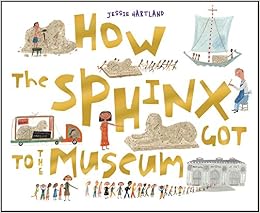
Starred Review. Grade 1–4—Lively artwork and rhythmic text highlight this unique picture book that tells the story of how one particular piece of Egyptian sculpture ended up in the Metropolitan Museum of Art in New York City. Hartland begins with a brief description of Hatshepsut and her significance as a female pharaoh in ancient Egypt, as well as explaining how most pharaohs had many pieces of statuary created in their honor. The story continues to build as Hatshepsut orders the creation of the sphinx, the sculptor secures the granite, the priests admire it, the stepson destroys it, and then the real fun begins after an archaeologist discovers it 3000 years later in a pit and begins the process of acquisition for the museum. The cadenced writing is simultaneously predictable and unexpected, making it a joy to read aloud, inviting listeners to join in. It also includes vocabulary such as curator, rigger, and registrar, providing the opportunity to delve into discussions of unusual career choices, as well as fun verb choices that will intrigue children. The accompanying illustrations are animated and detailed, from an archaeologist's tools to a curator's cluttered office—plenty for young eyes to discover and share. Brilliantly simple and effective, this is an excellent addition to any elementary collection.—Jody Kopple, Shady Hill School, Cambridge, MA (c) Copyright 2011. Â Library Journals LLC, a wholly owned subsidiary of Media Source, Inc. No redistribution permitted.

Read more

From Booklist

*Starred Review* At some point every visitor to a museum wonders the same thing: How did that get here? With exhaustive, dizzying, yet crystal clear detail, Hartland answers that question in regard to a seven-ton sphinx from ancient Egypt. The opening illustration introduces a museum docent and a gaggle of curious students, but then we backtrack to the reign of Pharaoh Hatshepsut, who requests from a sculptor six granite sphinxes. Priests observe the finished works; years later, Pharaoh Thutmose III destroys them; 3,000 years later, an archaeologist discovers the ruins. This is just the beginning—before it’s over we’ll meet art movers, curators, conservators, riggers, registrars, retouchers, and more, and the increasing lineup is featured on each right-hand page in “house-that-Jack-built” stair-steps: “The SPHINX that was documented by the PHOTOGRAPHER, painted and restored by the ARTIST, officially numbered by the REGISTRAR,” and so on. Eye-openers abound (the movers, for example, avoid “bumpy roads and tight turns”); while Hartland’s cheery, childlike paintings effortlessly shift from desert to city to museum. Closing historical notes are also great. The overall elicited emotion is awe—both for the passage of time and for the steps required to bring a simple hunk of stone to the fifteenth person: you. Grades 2-4. --Daniel Kraus

Read more

See all Editorial Reviews

Product details

Age Range: 6 - 9 years

Lexile Measure: AD1460L (What's this?)

amznJQ.available('jQuery', function() {

amznJQ.available('popover', function() {

jQuery("#lexileWhatsThis_db").amazonPopoverTrigger({

showOnHover: true,

showCloseButton: false,

title: 'What is a Lexile measure?',

width: 480,

literalContent: 'A Lexile® measure represents either an individual's reading ability (a Lexile reader measure) or the complexity of a text (a Lexile text measure). Lexile measures range from below 200L for early readers and text to above 1600L for advanced readers and materials. When used together Lexile measure help a reader find books at an appropriate level of challenge, and determine how well that reader will likely comprehend a text. When a Lexile text measure matches a Lexile reader measure, this is called a "targeted" reading experience. The reader will likely encounter some level of difficulty with the text, but not enough to get frustrated. This is the best way to grow as a reader - with text that's not too hard but not too easy.',

openEventInclude: "CLICK_TRIGGER"

});

});

});

Series: How the . . . Got to the Museum

Hardcover: 40 pages

Publisher: Blue Apple Books (September 1, 2010)

Language: English

ISBN-10: 1609050320

ISBN-13: 978-1609050320

Product Dimensions:

9.2 x 0.5 x 11.2 inches

Shipping Weight: 1.2 pounds (View shipping rates and policies)

Average Customer Review:

4.4 out of 5 stars

8 customer reviews

Amazon Best Sellers Rank:

#833,632 in Books (See Top 100 in Books)

Shipped quickly. Grandson Loved it.

I bought this book for my six year old who has been obsessed with everything Egyptian lately. It is a cute look into where pieces of history come from and how they end up in the museum. It focuses on one mummy, a woman pharaoh named Hatshepsut and her journey from being pharaoh to ending up in the Metropolitan Museum of Modern Art.

One of the most frequent requests I get from parents in my library is a desire for books on "community workers". Which is to say, their children have been given an assignment in school on writing about the people who work in their neighborhood, and so we are charged with coming up with books about sanitation workers, doctors, bus drivers, etc. This being New York City, I always kind of wish that I'd get a request for a community worker a little out of the ordinary. How about a request for a book on a conservator? Or a museum registrar? Why do docents always end up with the short end of the stick? Of course, even if I did get a request for one of these, I'd actually have to produce a book that says what such museum folks actually do. Still, that's no problem since the publication of "How the Sphinx Got to the Museum". Basically author/illustrator Jessie Hartland came up with a radical notion. Why not combine a book that explains the jobs people do with a real life mystery (how a busted sphinx was returned to its full splendor for display in the Metropolitan Museum of Art) and then present it in a cumulative tale format? Why that's so crazy it just might work. And work it does in a story that satisfies a child's need for story while also working in some pretty cool details about why museums are full of statues from other countries far far away.A group of kids visit The Metropolitan Museum of Art and are told a strange fact. Before their eyes sits a sphinx created for the Pharaoh Hatshepsut. The kicker? That same statue was destroyed a mere twenty years after its creation on orders from Hatshepsut's successor and stepson. So how on earth has it come to reside fully intact in a museum in America? To answer that you have to begin at the beginning. And so the docent recounts the many steps and people who contributed to the sphinx's story. Hatshepsut commissioned, the sculptors sculpted, the priests admired it, and the stepson had it destroyed. From there the story takes a turn, rediscovered centuries later in a pit by an archaeologist, brought to America, and restored. As each piece of the puzzle falls into place we are consistently reminded of the people who came before, until at long last we reach the present day. A section called "More History" at the end clarifies many of the details and gives kids additional information on the real statue and its current location.The real trick here, as it is with any cumulative tale, is to know how to tell a story with a lot of repetition without making it boring. I should clarify what a cumulative tale is by this point, yes? Basically what I'm talking about is a book that tells a story the same way you would in a classic like "This is the House that Jack Built". It's where you introduce an element and then build on it, always returning for a kind of chorus. The books that are successful at this (like "The Apple Pie That Papa Baked") know how to keep a reader interested, even as the same information is conjured up time and time again. In the case of "How the Sphinx Got to the Museum", Hartland has the advantage of telling a true story. As a result, the more you repeat what happened to the sphinx (it was . . . "secured by the Art Movers, supervised by the Department of Antiquities, found in a pit by the Archaeologist") not only are you bringing up the true story of its travels, you're also teaching kids about certain jobs by having them repeat the wordy occupations over and over again. Teachable moments! Woot!The fact that the book is mostly factual places it in a funny position in libraries. Where do you put it? It kind of looks like a picture book, and indeed might be interesting there, but in the end it tends to end up in the Ancient Egypt section of nonfiction. Interesting since there are some details that were stretched a bit to fit the telling. At the end of the book Hartland admits freely that "The part of this book when Hatshepsut orders several statues from the sculptor is somewhat made up." I trust her as an author, but when I read that I kind of want to know how many other details were true. Did the Sphinx really get sent to America on a ship called The Cingalese Prince? I mean, it had to, right? Who would make that kind of thing up? A little Bibliography or section at the end recommending websites or books for further reading would not have been out of place here. I liked the "More History" but found myself wanting more for the interested kids out there.Hartland has a bit of a Maira Kalman style about her. That incredibly flat, near two-dimensional quality of her art. The book offers no hints on her style or what medium she uses, and her website is equally mum on the subject. What's kind of cool is that she has in her short picture book career already created books for Candlewick, Penguin, Chronicle, Bloomsbury, and now Big Apple Books. In the case of this particular book, Hartland has chosen to set many of the images here against relatively uncluttered backgrounds. There's always adequate room for her text, which doesn't sound impressive until you realize how long the cumulative collection of folks involved with the statue really are. After a while, you also begin to notice that each person's designation ("Department of Antiquities", "Egyptian Priests", etc.) is granted its own distinctive font. That's a detail that keeps the book visually stimulating, even if you don't notice it right off the bat.Of course the best news to leave you with is the fact that this is not Hartland's sole journey into this kind of nonfiction cumulative fare. Following up this title will be a similar book about how a dinosaur got to what I believe will be The Smithsonian, as well as a third title about how a painting (to be determined) got from artist to permanent gallery display. Clearly this is a fun concept with a lot of different applications one can work with and the first in the series is a true keeper. If you, like myself, are a bit sick of the endless identical Ancient Egypt children's fare out there and would like to see something original, Hartland has your number. Consider this a great way to bridge the past and the present for your kids.Ages 4-8.

If you've are lucky enough to walk up the stairs and into the Metropolitan Museum of Art in New York City, you may have been able to see one of Hatshepsut's sphinxes. Hatshepsut was a pharaoh who ruled in ancient Egypt. There were many pharaohs and perhaps the most famous or memorable was King Tutankhamen, but Hatshepsut was undoubtedly the most unusual. Hatshepsut was a woman and that just wasn't supposed to happen in Egypt, but it did. There were "many monuments and pieces of art [that] were created in her honor." As with most pharaohs there were many different kinds of memorial objects that were created to be placed in their tombs or in front of their temples.Hatshepsut had artisans carve several stone sphinxes to stand "guard in front of her temple." She supervised her architect, Senenmut, who created her temple. Plans were drawn up to make statues, "including a set of six sphinxes." The granite was mined at an quarry in Aswan and with great difficulty this "HUGE block of granite" made its way down the Nile on a boat. Pharoah Hatshepsut's dream began to take shape and her magnificent temple was soon guarded by the six sphinxes. Later, after she died, her stepson, Thutmose III, had "all of the beautiful artwork, including the sphinxes," destroyed and buried in a pit. Who found these pieces? How were they put back together again and just how did that sphinx get to the Met?This is a fascinating glimpse at an unusual Egyptian pharaoh and how one of her sphinxes made it to the Met. Most people have never heard of Hatshepsut, but she is just starting to become known to the younger set and this is one of the more interesting portraits of her. The story is progressive and by the time we get to the end we know exactly how that sphinx made its way to 1000 Fifth Avenue so all of us can visit with him. For example, once we meet the archaeologist, "he uncovers the pit with the broken pieces of dozens of statues, including the sphinx that was ... dumped there by the stepson, marveled at by the Egyptian priests, chiseled by the sculptor and order by the pharaoh." At the end we are greeting by the docent and work our way back to the pharaoh. The artwork is marvelously quaint and very appealing. In the back of the book are additional facts and figures, more history, and we learn more about where the other sphinxes went.

This book helped me and my children to love the Met even more. The Sphinx is a beautiful statue but it is overshadowed by the huge Temple of Dendur looming over it. Now that we have read this book my kids love finding the little red numbers that identify it, and examine the parts of the statue that are real vs plaster. Did you know they intentionally make the plaster look different from the original so it's easier to tell the two apart? Because the Met has a room dedicated to Hatshepsut statues, this book helped us to value all of those works of art as well (this Sphinx is not in that room). It brings an ancient statue to life, helping us feel it's colorful history and understand it's significance. How often is a masterpiece broken to boxes and boxes of pieces, buried in a pit for thousands of years, discovered, shipped to New York, and put back together again for the world to admire once more? It's uncommon to find a book that covers an object's history as well as it's preservation. It helped us appreciate all the work gone into acquiring the many masterpieces that make the Met the amazing museum that it is. This is a really great book.

How The Sphinx Got To The Museum (How the . . . Got to the Museum), by Jessie Hartland PDF
How The Sphinx Got To The Museum (How the . . . Got to the Museum), by Jessie Hartland EPub
How The Sphinx Got To The Museum (How the . . . Got to the Museum), by Jessie Hartland Doc
How The Sphinx Got To The Museum (How the . . . Got to the Museum), by Jessie Hartland iBooks
How The Sphinx Got To The Museum (How the . . . Got to the Museum), by Jessie Hartland rtf
How The Sphinx Got To The Museum (How the . . . Got to the Museum), by Jessie Hartland Mobipocket
How The Sphinx Got To The Museum (How the . . . Got to the Museum), by Jessie Hartland Kindle

How The Sphinx Got To The Museum (How the . . . Got to the Museum), by Jessie Hartland PDF

How The Sphinx Got To The Museum (How the . . . Got to the Museum), by Jessie Hartland PDF

How The Sphinx Got To The Museum (How the . . . Got to the Museum), by Jessie Hartland PDF